How to Choose Coaxial Cable: A Practical Buying Guide for Better Signal Performance
Buying a new television, installing CCTV cameras, or setting up a broadband connection? Then one small component can decide how well your entire system performs—the coaxial cable.
Most people spend time comparing televisions, cameras, or internet plans, but very few pay attention to the cable that carries the signal. Unfortunately, even the most advanced equipment cannot deliver its best performance if the cable quality is poor.
Electricians often come across situations where customers complain about blurry TV pictures, unstable internet, or poor CCTV footage. In many cases, the equipment is working perfectly—the real problem is the cable.
That’s why understanding how to choose coaxial cable is important before making a purchase. A good-quality cable improves signal strength, reduces maintenance, and provides reliable performance for years.
Why Choosing the Right Coaxial Cable Is Important
A coaxial cable is designed to carry television, internet, satellite, and CCTV signals from one point to another. Since it continuously transfers data, its construction directly affects the quality of the signal.
Using a poor-quality cable may result in:
Weak television signals
Blurry CCTV recordings
Frequent internet interruptions
Increased signal loss
Higher maintenance expenses
A premium cable ensures stable performance while protecting signals from electrical interference and environmental conditions.
Step 1: Know Where the Cable Will Be Used
The first question you should ask is:
“Where am I installing this cable?”
Different applications have different requirements
A TV coaxial cable used inside a living room does not require the same protection as a cable installed outdoors for CCTV surveillance.
Common applications include :
Television connections
Satellite TV systems
CCTV cameras
Broadband internet
Security systems
Commercial communication networks
Selecting the correct signal transmission cable according to the application improves both efficiency and service life.
Step 2: Choose a Cable with Low Signal Loss
One of the most important factors while purchasing a coaxial cable is signal attenuation.
Signal attenuation simply means the reduction of signal strength as it travels through the cable.
Experienced installers know that longer cable runs naturally increase signal loss. This is why using a low signal loss cable becomes extremely important, especially for large homes, offices, hotels, and commercial buildings.
A low signal loss cable helps provide:
Better picture quality
Stable internet speed
Reliable CCTV footage
Consistent signal transmission
The lower the signal loss, the better the overall performance.
Step 3: Check the Conductor Material
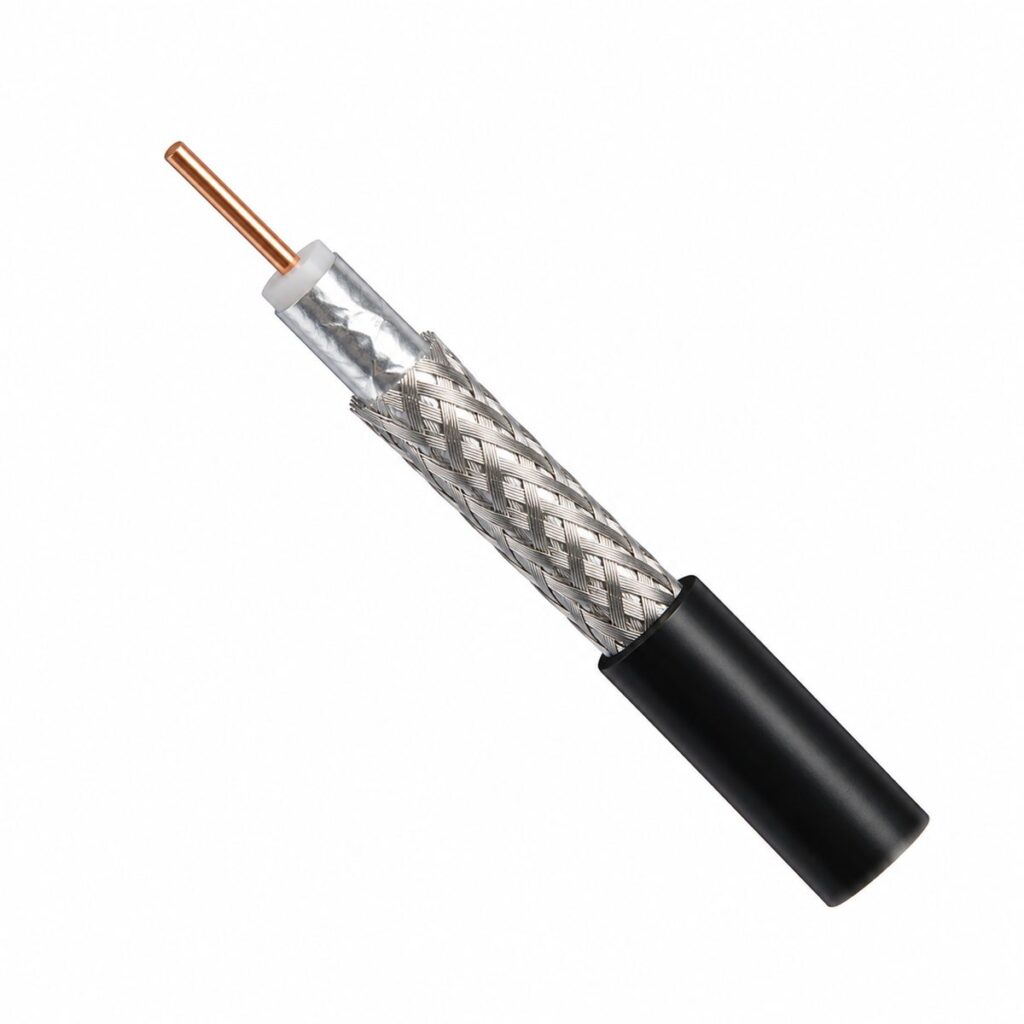
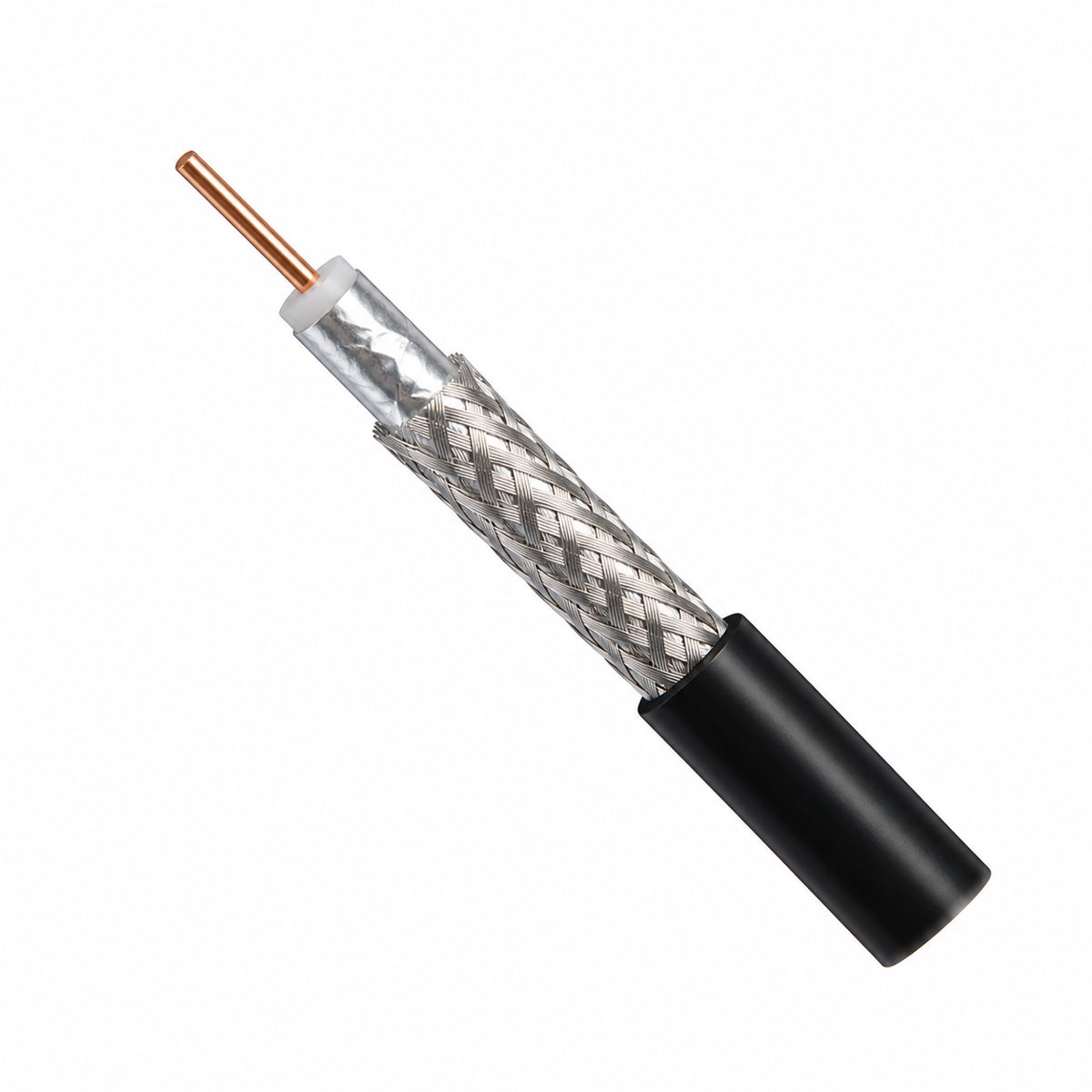
The conductor is the central part of every coaxial cable.
Generally, you’ll find two types of conductors.
Pure Copper
Pure copper offers:
Higher conductivity
Lower resistance
Better signal quality
Longer service life
Copper-Clad Steel
Copper-clad steel provides:
Better mechanical strength
Lower cost
Suitable performance for shorter cable runs
For installations where signal quality is critical, many professionals prefer pure copper conductors.
Step 4: Pay Attention to Shielding
Shielding protects the cable from external electrical interference.
Imagine watching television while nearby electrical equipment creates disturbances in the signal. Poor shielding allows outside interference to affect picture quality.
Depending on your installation, you may find:
Single Shield
Double Shield
Quad Shield
A properly shielded durable coaxial cable delivers clearer signals and more stable performance.
This becomes especially useful in apartments, commercial buildings, factories, and locations with multiple electrical systems.
Step 5: Consider the Installation Environment
Will your cable remain inside the building ?
Or will it be installed outdoors?
Outdoor cables need additional protection because they are exposed to:
Sunlight
Rain
Dust
Humidity
Heat
A good durable coaxial cable should include:
UV-resistant outer jacket
Moisture-resistant insulation
Flexible construction
Heat-resistant materials
These features help maintain reliable performance even in challenging weather conditions.
Step 6: Check Equipment Compatibility
Before purchasing any signal transmission cable, make sure it is compatible with your equipment.
For residential applications, a 75 Ohm TV coaxial cable is commonly used for :
LED televisions
Set-top boxes
Satellite receivers
Broadband modems
CCTV cameras
Using the correct impedance ensures efficient signal transfer without unnecessary losses.
Step 7: Buy from a Trusted Manufacturer
Not every cable available in the market offers the same level of quality.
Two cables may look identical externally, but their internal construction can be completely different.
Choose a manufacturer that focuses on:
Quality raw materials
Consistent manufacturing standards
Product testing
Reliable customer support
Industry certifications
A trusted manufacturer helps ensure long-term reliability and better overall performance.
Quick Comparison: Ordinary Cable vs Premium Cable
Feature
Ordinary Cable
Premium Cable
Signal Quality
Average
Excellent
Signal Loss
Higher
Lower
Shielding
Basic
Advanced
Durability
Limited
Long-lasting
Outdoor Performance
Average
Excellent
Maintenance
Frequent
Minimal
Sometimes spending a little more on a quality cable saves significant repair and replacement costs in the future.
💡Quick Tip
Don't choose a coaxial cable based only on price.
Instead, compare:
✔ Conductor quality
✔ Shielding
✔ Signal loss
✔ Outdoor durability
✔ Manufacturer reputation
A better cable today means fewer service calls tomorrow.
Common Mistakes Buyers Should Avoid
Many buyers unknowingly make these mistakes:
Buying the cheapest available cable
Ignoring shielding quality
Using indoor cables outdoors
Purchasing unnecessary cable lengths
Choosing cables without checking specifications
Avoiding these mistakes helps improve performance and increases the lifespan of your installation.
Frequently Asked Questions
How do I choose the right coaxial cable ?
Choose a cable based on its application, conductor quality, shielding, durability, signal loss, and compatibility with your equipment.
Why is a low signal loss cable important ?
It maintains stronger signal quality over longer distances and reduces interruptions in TV, CCTV, and internet connections.
Which conductor is better ?
Pure copper generally offers better conductivity and is preferred for installations where stable signal transmission is essential.
Can a coaxial cable be used outdoors ?
Yes, provided it is designed with UV-resistant insulation and weatherproof construction.
Conclusion
Knowing how to choose coaxial cable can save you from many future problems. A high-quality coaxial cable does much more than connect devices—it ensures clear television reception, reliable CCTV footage, and stable internet performance.
Whether you are purchasing a TV coaxial cable for your home or a signal transmission cable for commercial applications, always focus on conductor quality, shielding, durability, and signal loss instead of choosing solely based on price.
Investing in a durable coaxial cable with low signal loss provides better performance, lower maintenance, and long-term value. Making the right choice today ensures your electrical and communication systems continue working efficiently for years to come.
Leave a Reply